1. Fundamentals of Advanced Chemical Materials
Chemical materials encompass a broad range of substances developed or investigated for specific physical, chemical, or functional properties. Their characteristics depend on the nature of their constituent molecules or atoms and the way these components are organized.
Material properties may include mechanical strength, thermal resistance, electrical conductivity, optical behavior, surface activity, and chemical stability.
Understanding these characteristics requires knowledge of chemical bonding, molecular interactions, crystallinity, phase composition, and structural organization.
Advanced materials research examines how these features can be evaluated, modified, or combined to achieve particular performance requirements. Depending on the intended application, researchers may investigate a material's behavior under different temperatures, pressures, chemical environments, or mechanical conditions.
A systematic understanding of composition and structure provides the foundation for selecting appropriate characterization methods and interpreting experimental results.
2. Major Categories of Chemical Materials
Organic Materials
Organic materials contain carbon-based molecular structures and include polymers, resins, organic coatings, and functional molecular compounds.
Their properties can be influenced by molecular weight, functional groups, chain architecture, crosslinking, and intermolecular interactions. These characteristics affect solubility, flexibility, chemical resistance, and thermal behavior.
Organic materials are investigated in coatings, packaging, separation technologies, specialty formulations, and many other industrial applications.
Inorganic Materials
Inorganic materials include metal oxides, ceramics, mineral compounds, coordination complexes, and other non-organic systems.
Depending on their composition and structure, these materials may exhibit high thermal stability, hardness, electrical properties, catalytic activity, or resistance to specific chemical environments.
Their characterization frequently involves the investigation of crystalline phases, elemental composition, surface properties, and thermal behavior.
Polymer-Based Materials
Polymers consist of repeating molecular units connected into chains or networks. Differences in monomer composition, molecular architecture, and processing conditions can produce substantial variations in material properties.
Researchers investigate polymer morphology, molecular structure, thermal transitions, mechanical performance, and resistance to environmental exposure.
Polymer characterization is particularly important when evaluating material consistency, processing behavior, and suitability for specialized applications.
Hybrid and Composite Materials
Hybrid materials combine different chemical components within an integrated structure, while composites generally contain two or more distinct constituents that contribute to the overall properties.
Examples include polymer–inorganic composites, particle-reinforced materials, and organic–inorganic hybrid systems.
Their performance may depend on component distribution, interfacial adhesion, surface modification, and the compatibility of the constituent phases.
Characterization helps researchers determine how these structural features influence the behavior of the complete material.
3. Chemical Composition and Molecular Structure
Chemical composition describes the substances and elements present in a material, while molecular structure concerns the arrangement and bonding of its constituent atoms.
Both aspects influence the properties and behavior of chemical systems.
Elemental analysis can provide information about the relative amounts of selected elements. Spectroscopic methods can help identify chemical bonds and functional groups, while mass spectrometry can contribute to molecular identification and compositional analysis.
For crystalline materials, diffraction techniques provide information about structural organization and phase composition. For polymeric and amorphous systems, other methods may be needed to investigate molecular organization and structural characteristics.
The interpretation of analytical results requires consideration of the sample, the measurement technique, and the limitations of the available data.
Combining complementary analytical approaches can provide a more complete understanding of the relationship between composition and material properties.
4. Spectroscopic Characterization Techniques
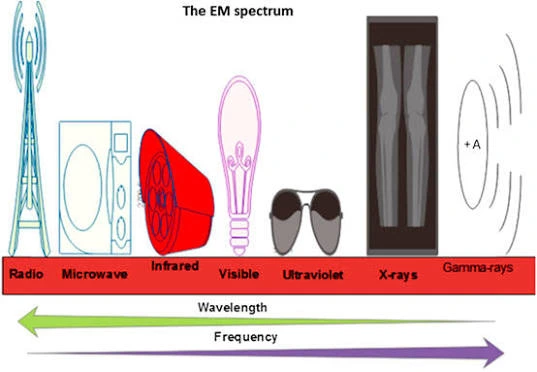
Spectroscopy investigates the interaction between matter and electromagnetic radiation. Different spectroscopic methods provide information about molecular structure, chemical environments, electronic transitions, and elemental composition.

Fourier Transform Infrared Spectroscopy
Fourier transform infrared spectroscopy identifies characteristic vibrational absorptions associated with chemical bonds and functional groups.
It is frequently used to investigate polymers, organic compounds, coatings, and other materials containing infrared-active molecular groups.
Changes in spectral features can provide evidence of chemical transformations or differences in material composition, although interpretation should account for overlapping signals and measurement conditions.
Raman Spectroscopy
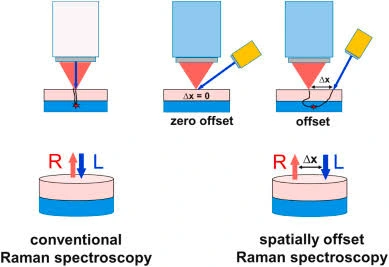
Raman spectroscopy examines molecular vibrations through inelastic light scattering. It can complement infrared spectroscopy by providing additional information about molecular structure and material organization.
Applications include the investigation of carbon-based materials, crystalline compounds, polymers, and selected inorganic systems.
Nuclear Magnetic Resonance Spectroscopy
Nuclear magnetic resonance spectroscopy provides information about the chemical environments of certain atomic nuclei. It is widely used to investigate molecular structure, chemical composition, and the organization of organic compounds.
The choice of spectroscopic method depends on the material and the information required for the investigation.

5. Chromatography and Mass Spectrometry
Chromatographic methods separate components within a mixture according to differences in their interactions with a stationary phase and a mobile phase.
Gas chromatography is commonly applied to volatile and sufficiently thermally stable compounds, whereas liquid chromatography is suitable for a wide range of less volatile or thermally sensitive substances.
Mass spectrometry measures ions according to their mass-to-charge ratios and can support compound identification, structural investigation, and quantitative analysis when an appropriate method is available.
Coupled techniques, such as gas chromatography–mass spectrometry and liquid chromatography–mass spectrometry, combine separation with mass-based detection.
These methods are useful for examining chemical composition, identifying impurities, analyzing complex mixtures, and evaluating selected material constituents.
Reliable interpretation requires appropriate sample preparation, calibration where applicable, and consideration of method-specific limitations.
6. Microscopy and Surface Characterization
Surface characteristics and microscopic structure can influence how a material interacts with its surroundings. Features such as roughness, porosity, particle size, and surface composition may affect adhesion, wetting, reactivity, and transport processes.
Optical microscopy provides an accessible approach for examining larger structural features. Scanning electron microscopy can reveal detailed surface morphology, while transmission electron microscopy can provide information about fine internal structures in suitable samples.
Atomic force microscopy can be used to investigate surface topography and selected mechanical properties at small scales.
Additional techniques, including X-ray photoelectron spectroscopy, can provide information about surface elemental composition and chemical states.
The appropriate combination of methods depends on the material's characteristics and the specific research question.

7. Thermal and Mechanical Characterization
Thermal analysis examines changes in materials as a function of temperature or time under defined experimental conditions.
Differential scanning calorimetry can identify thermal transitions such as melting and glass transition behavior. Thermogravimetric analysis measures changes in sample mass during a controlled temperature program or other specified conditions.
These techniques are commonly used to investigate polymer stability, decomposition behavior, moisture loss, and thermal transitions.
Mechanical characterization evaluates the response of a material to applied forces or deformation. Depending on the material and application, tests may investigate tensile strength, elasticity, hardness, compression, or fracture behavior.
Thermal and mechanical measurements provide complementary information about material performance and can help researchers assess whether a material meets defined technical requirements.

8. Surface Properties and Material Interactions
Surface properties frequently influence the behavior of materials in contact with liquids, gases, biological systems, or other solids.
Wettability, surface energy, roughness, chemical functionality, and surface charge can affect adhesion, dispersion, corrosion, and interfacial interactions.
Contact-angle measurements are commonly used to evaluate the wetting behavior of a surface. Surface spectroscopy and microscopy can provide additional information about chemical composition and morphology.
In composite materials, the interface between different components can influence stress transfer, structural integrity, and overall performance.
Understanding these interactions is important when developing coatings, membranes, composite systems, sensors, and other materials whose function depends on surface behavior.
Emerging Developments in Material Characterization
Advances in analytical instrumentation and computational methods are expanding the possibilities for investigating complex chemical systems.
High-resolution imaging, advanced spectroscopy, automated analytical workflows, and data-processing tools can help researchers examine material properties in greater detail.
Computational modeling can support the interpretation of experimental results and the investigation of possible relationships between molecular structure and material behavior.
Machine learning approaches are also being explored to analyze large datasets, recognize patterns, and support the prediction of selected material properties.
These methods depend on reliable data, appropriate model evaluation, and experimental confirmation where required.
The integration of analytical measurements, computational analysis, and materials engineering offers new opportunities for understanding complex structures and guiding future research.
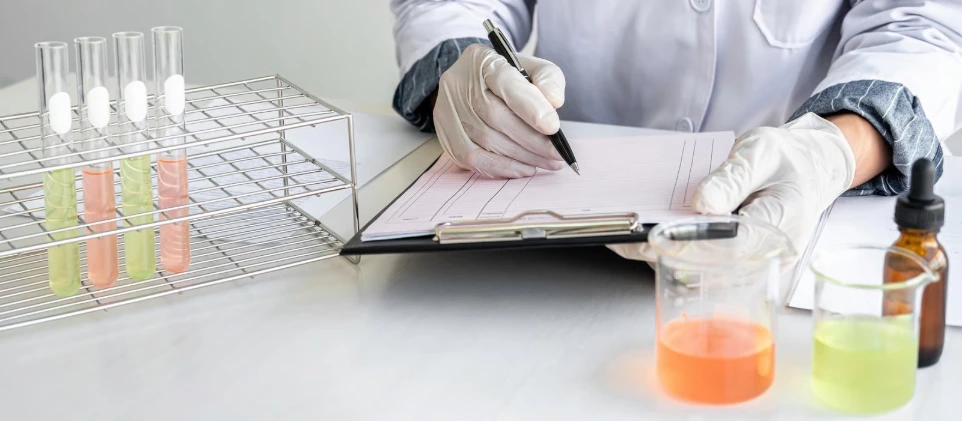

Advanced chemical materials require systematic investigation to understand their composition, structure, stability, and functional properties.
Spectroscopy, chromatography, mass spectrometry, microscopy, diffraction, and thermal analysis each provide different forms of information. When selected appropriately and combined where necessary, these techniques help researchers develop a more complete understanding of material behavior.
Reliable characterization also depends on suitable experimental procedures, quality assurance, and careful interpretation of results.
As chemical science and materials engineering continue to develop, the integration of analytical methods and interdisciplinary research will remain essential for investigating new materials and evaluating their potential applications across scientific and industrial environments.