Exploring Biochemical Utilities and Chemical Material Innovations

Chemical Resources and Scientific Applications
Chemical resources encompass a broad range of substances used in laboratory investigations, industrial processes, and scientific development. These resources include organic compounds, inorganic substances, solvents, analytical standards, reagents, and specialized chemical preparations.
Each category presents specific properties that influence its potential applications. Molecular structure, purity, concentration, solubility, and reactivity are among the characteristics that researchers consider when selecting materials for a particular purpose.
Organic chemistry investigates carbon-based compounds and their transformations, while inorganic chemistry explores metals, minerals, coordination complexes, and other chemical systems. Physical chemistry provides additional insight into molecular interactions, thermodynamic behavior, reaction kinetics, and the properties of matter.
Together, these disciplines establish a foundation for understanding chemical substances and evaluating their suitability for different experimental and industrial applications.
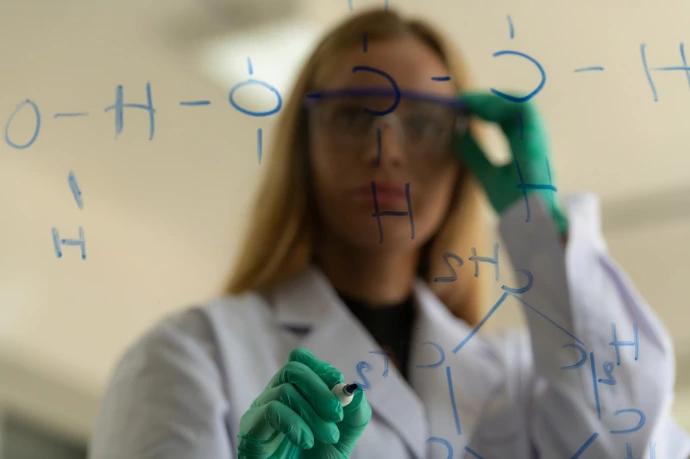

Organic, Inorganic, and Hybrid Materials
Organic and inorganic materials exhibit different combinations of chemical, physical, and functional properties.
Organic materials offer considerable molecular diversity and can be designed or modified through changes in their chemical structures. Polymers, organic coatings, and functional molecules are examples of materials investigated for their flexibility, reactivity, and potential applications.

Inorganic materials, including metal oxides, mineral compounds, catalysts, and coordination complexes, are studied for properties such as thermal stability, electrical behavior, surface activity, and chemical resistance.
Hybrid materials combine selected characteristics of organic and inorganic components. These systems are investigated in areas such as catalysis, protective coatings, sensing technologies, separation processes, and functional surfaces.
Their performance depends on factors including composition, structural organization, interfacial interactions, and preparation conditions.

Analytical Chemistry and Material Evaluation
Analytical chemistry provides the methods required to identify substances, measure concentrations, investigate mixtures, and evaluate chemical composition.
Qualitative analysis focuses on determining which substances are present in a sample, whereas quantitative analysis measures the amount or concentration of selected components.
Depending on the research objective, analytical investigations may involve chromatography, spectroscopy, titration, electrochemical measurements, or other suitable techniques.
The reliability of an analytical result depends on several factors, including sampling, preparation procedures, instrument performance, calibration, and data interpretation.
Quality evaluation may also involve controls, reference materials, repeat measurements, and appropriate assessments of precision and accuracy.
These practices contribute to better experimental consistency and help researchers interpret results within the limitations of the selected analytical method.Learn more


Biochemical Materials and Biotechnology
Biotechnology connects biological systems with scientific and industrial applications. Its intersection with materials science has encouraged research into biopolymers, enzyme-functionalized materials, biomolecular assemblies, and specialized surfaces.
Naturally occurring substances such as proteins and polysaccharides offer structures that can be investigated for their physical and chemical characteristics. Their molecular organization, functional groups, and interactions with surrounding environments influence their behavior.
Researchers investigate biochemical materials for potential applications in encapsulation, filtration, sensing, molecular recognition, and other specialized technologies.
Developing these materials requires careful consideration of composition, stability, reproducibility, and performance under relevant conditions.
Collaboration between chemists, biologists, materials scientists, and engineers supports the exchange of knowledge needed to understand these complex systems.
Chemical Innovation in Industrial Development
Industrial chemistry applies scientific principles to the production, transformation, separation, and characterization of substances and materials.
Chemical processes are used in the development of polymers, coatings, catalysts, specialty compounds, and functional mixtures. Their performance depends on reaction conditions, material compatibility, process efficiency, and product specifications.
Scaling a process from laboratory experimentation to industrial production introduces additional considerations, including energy requirements, raw material availability, equipment design, waste management, and process monitoring.
Analytical verification and quality management help evaluate product consistency and identify deviations during manufacturing.
Continued development in industrial chemistry focuses on improving process performance, understanding material behavior, and evaluating opportunities for more efficient resource utilization.

Sustainable Chemistry and Responsible Materials
Sustainable chemistry investigates approaches to reducing the environmental impact of chemical products and processes while maintaining appropriate performance and quality.
Research in this field includes renewable feedstocks, solvent selection, energy-efficient reactions, waste reduction, recyclable polymers, and alternative material formulations.
Evaluating sustainability requires consideration of more than a single property. Material production, transportation, use, recovery, and disposal can all influence its overall environmental profile.
Biochemical resources may contribute to the development of alternative materials when their sourcing, processing, performance, and end-of-life characteristics are carefully assessed.
The integration of chemical knowledge and responsible resource management provides a framework for investigating more sustainable approaches to material development.
Emerging Trends in Chemical and Material Research
Advances in analytical instrumentation, computational chemistry, molecular modeling, and data analysis are expanding the possibilities for studying chemical systems.
Computational methods can help researchers investigate molecular structures, compare potential compounds, and formulate hypotheses about material properties. Experimental measurements remain important for evaluating these predictions and determining how materials behave under actual conditions.
Other areas of interest include functional polymers, advanced coatings, chemical sensors, catalytic materials, and specialized separation technologies.
These fields demonstrate how fundamental chemical research can inform the development of new material systems and industrial applications.
Scientific collaboration and rigorous evaluation remain important for translating emerging concepts into practical technologies.Learn more
Connecting Molecular Knowledge with Material Innovation
The relationship between chemistry, biochemistry, and materials science continues to generate new research questions and technological possibilities.
Understanding molecular interactions helps explain material behavior, while analytical characterization provides evidence about composition and performance. Together, these approaches contribute to the evaluation and development of chemical systems for research and industrial use.
From laboratory reagents to advanced hybrid materials, each category requires an appropriate understanding of its properties, limitations, and potential applications.
Exploring these connections encourages a more integrated perspective on scientific development, combining fundamental knowledge with practical evaluation.