
Exploring New Approaches to Molecular Design, Advanced Materials, and Scientific Innovation
Chemical and material research continues to evolve through advances in molecular analysis, computational chemistry, analytical instrumentation, and materials engineering. These developments are expanding scientific understanding of how chemical composition, molecular structure, and processing conditions influence material properties and performance.
From functional polymers and hybrid compounds to catalytic systems and sustainable materials, researchers are investigating new ways to understand, characterize, and develop chemical systems for specialized applications. These efforts connect fundamental chemistry with biotechnology, industrial manufacturing, environmental science, and advanced technological development.
Emerging research directions are increasingly interdisciplinary. Chemists, materials scientists, biologists, and engineers combine experimental observations with computational approaches to investigate complex structures, evaluate material behavior, and identify opportunities for further development.
1. Molecular Design and Structure–Property Relationships
Molecular design plays an important role in the development of chemical compounds and functional materials. The arrangement of atoms, the nature of chemical bonds, and the distribution of functional groups influence properties such as solubility, stability, reactivity, and intermolecular interactions.
Researchers investigate these relationships to understand why materials with similar compositions may exhibit different behaviors. Molecular geometry, crystallinity, molecular weight, and surface chemistry can all influence the final characteristics of a material.
Computational chemistry provides tools for examining molecular structures and exploring possible interactions before conducting experimental investigations. These approaches can help formulate hypotheses, compare candidate structures, and guide the selection of materials for further testing.
Experimental characterization remains essential for validating predictions and understanding how materials behave under defined conditions.
2. Advanced Polymers and Functional Materials
Polymers are widely studied because their structures can be adapted to produce a broad range of physical and chemical properties. Variations in monomer composition, chain architecture, crosslinking, and processing conditions can influence flexibility, strength, thermal stability, and chemical resistance.
Current research investigates functional polymers designed for specific environments or technical requirements. Examples include responsive polymer systems, conductive polymers, specialized membranes, protective coatings, and materials with controlled surface properties.
Hybrid polymer composites combine polymer matrices with additional components such as inorganic particles, fibers, or functional molecules. The resulting properties depend on component distribution, interfacial interactions, and the methods used to prepare the material.
Characterizing these systems requires complementary techniques that investigate morphology, mechanical behavior, thermal properties, and chemical composition.

3. Computational Chemistry and Data-Driven Research
Computational methods are becoming increasingly important in chemical and materials research. Molecular modeling, quantum chemical calculations, and molecular dynamics simulations can provide information about molecular interactions, structural stability, and potential reaction pathways.
Data-driven approaches can also help researchers identify patterns in experimental datasets and investigate relationships between material composition and measured properties.
Machine learning methods are being explored for tasks such as predicting material characteristics, prioritizing candidate compounds, and supporting the interpretation of complex chemical data. Their usefulness depends on the quality, diversity, and relevance of the data used to develop and evaluate the models.
Computational predictions should be interpreted alongside experimental evidence. Differences between simulated conditions and real-world environments can influence whether a predicted property is observed in practice.
The integration of computational and experimental approaches offers a framework for more systematic material investigation.

4. Advanced Analytical Techniques for Material Characterization
Reliable characterization is necessary for understanding the composition and performance of chemical materials. Modern analytical workflows frequently combine multiple techniques because no single method provides every type of information required.
Spectroscopic techniques, including infrared spectroscopy and nuclear magnetic resonance, can help investigate molecular structure and chemical environments. Chromatography supports the separation of complex mixtures, while mass spectrometry contributes to compound identification and compositional analysis.
X-ray diffraction is used to investigate crystalline structures, and electron microscopy can reveal detailed information about material morphology. Thermal analysis provides insight into transitions, decomposition, and changes that occur during controlled heating.

The choice of technique depends on the research question, the nature of the sample, and the level of detail required.
Combining complementary measurements can help researchers establish more complete relationships between chemical composition, structural organization, and material properties.
5. Sustainable Chemistry and Alternative Materials
Sustainability has become an important consideration in chemical process development and material design. Researchers are investigating approaches that reduce unnecessary resource consumption, improve process efficiency, and limit the generation of hazardous or persistent waste.
Areas of interest include renewable feedstocks, recyclable polymers, alternative solvents, catalytic processes, and materials designed for improved recovery or reuse.
Bio-based materials are also being investigated as alternatives or complements to materials derived from conventional fossil-based sources. Their environmental performance depends on several factors, including feedstock production, processing requirements, durability, and end-of-life management.
A renewable origin does not automatically mean that a material has a lower overall environmental impact. Comparative assessments must consider the complete production and use cycle whenever sufficient data are available.
Sustainable material research therefore combines chemical performance evaluation with broader considerations of resource use and environmental impact.

6. Catalytic Materials and Chemical Process Development
Catalysis enables chemical reactions to proceed through alternative pathways that can improve reaction rates or selectivity under suitable conditions. Catalysts are investigated in applications ranging from chemical synthesis to pollution control and industrial processing.
The performance of a catalytic material can depend on its composition, surface area, active sites, pore structure, and resistance to deactivation.
Researchers explore different approaches to catalyst preparation and characterization to understand how structural properties influence reaction behavior. Surface analysis, spectroscopy, and kinetic measurements can provide complementary information about catalytic systems.
Developing an effective catalyst also requires consideration of operating conditions, material stability, product separation, and regeneration.
These investigations contribute to the development of chemical processes that aim to achieve improved selectivity, resource efficiency, and consistent product quality.

7. Bio-Based Materials and Biochemical Interfaces
The relationship between biochemistry and materials science has created new research opportunities involving biological molecules and engineered material systems.
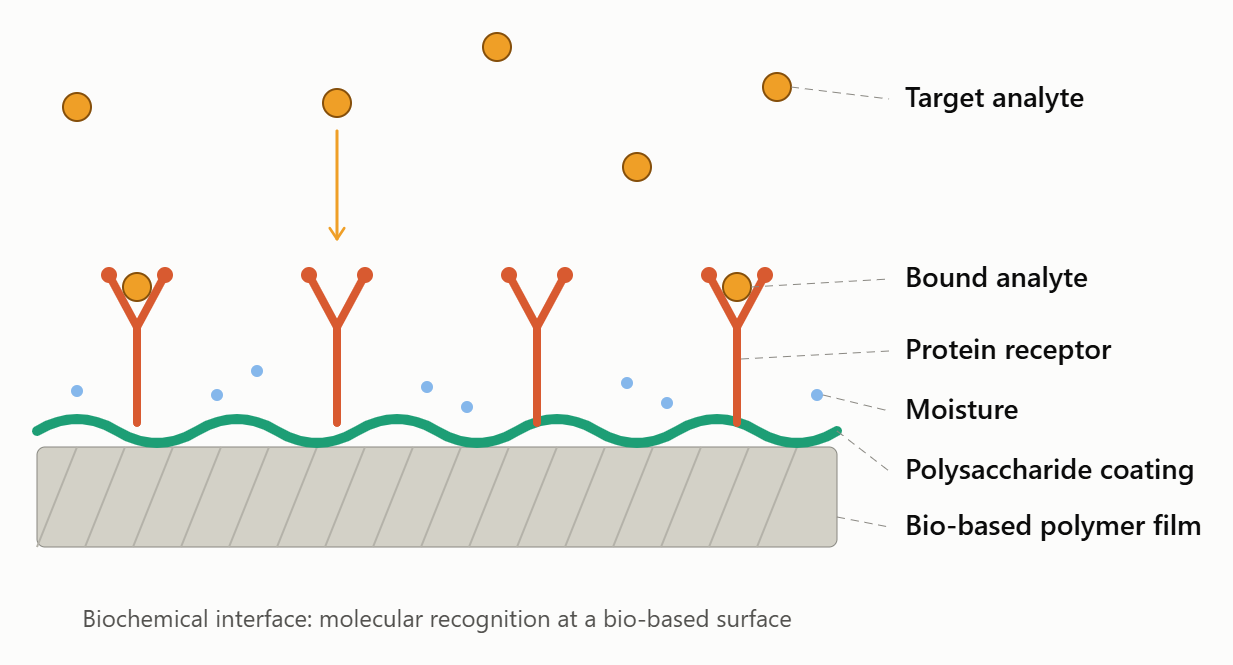
Proteins, polysaccharides, and other naturally occurring compounds can provide structural or functional components for specialized materials. Researchers investigate their molecular organization, chemical stability, and interactions with surrounding environments.
Bio-based polymers and biomolecular coatings are studied for applications in filtration, encapsulation, surface modification, and biosensing. Their performance depends on factors such as composition, moisture sensitivity, degradation behavior, and interactions with other materials.
Understanding biochemical interfaces requires knowledge of both molecular chemistry and material structure. Analytical methods can help evaluate surface composition, binding interactions, and changes in material properties under different conditions.
These interdisciplinary studies demonstrate how biological and chemical knowledge can contribute to the investigation of new functional systems.
8. Functional Surfaces and Smart Material Systems
Functional materials are designed to exhibit particular responses to external conditions or to perform specific tasks within a system. Examples include surfaces with controlled wettability, materials that respond to temperature or pH, and coatings that modify interactions between a material and its environment.
The behavior of these systems depends on their composition, surface structure, and response mechanisms. Researchers investigate how chemical modification and processing conditions influence their stability and performance.
Smart materials may be explored for sensing, separation, protective coatings, and specialized engineering applications. Their practical suitability depends on reproducibility, operating conditions, durability, and the ability to measure their response reliably.
Characterization methods that examine surface chemistry, morphology, and functional behavior are essential for understanding these systems.
9. Quality, Reproducibility, and Reliable Scientific Data
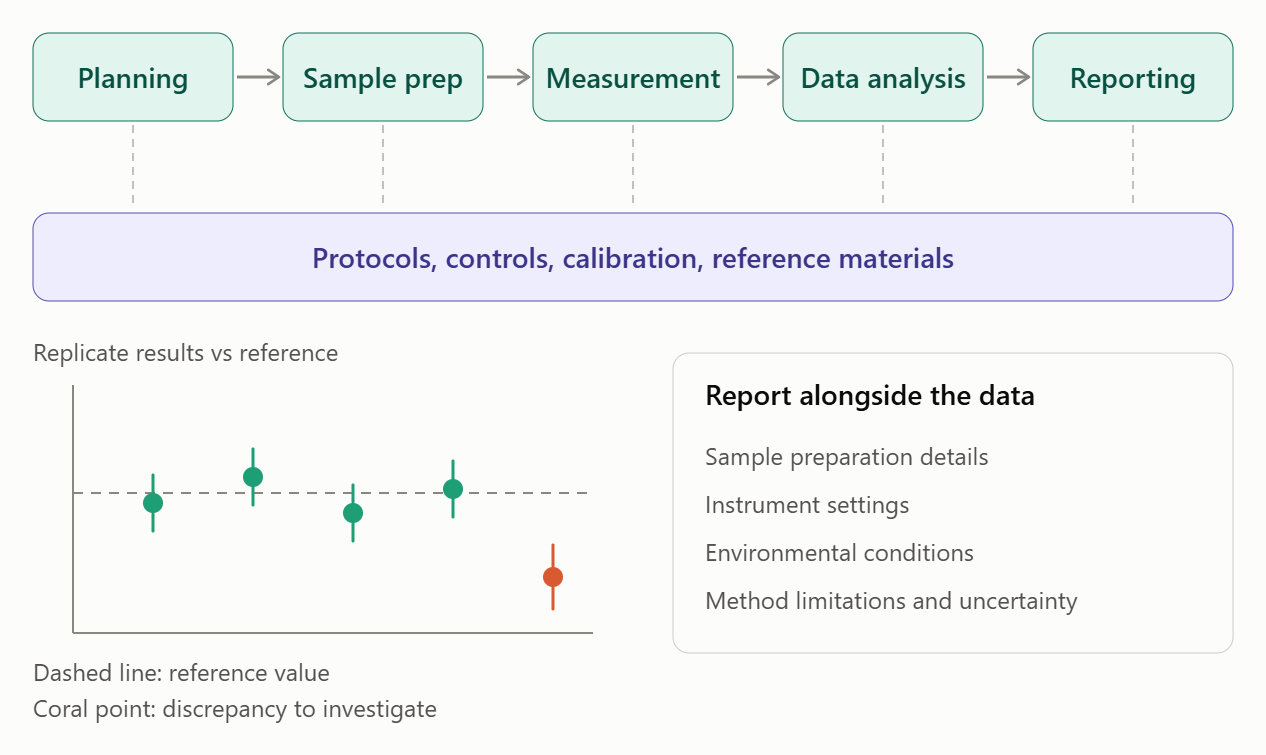
Scientific progress depends on reliable measurements and reproducible experimental procedures. In chemical and materials research, differences in sample preparation, instrument settings, environmental conditions, or data processing can influence the results obtained.
Researchers improve consistency through documented protocols, appropriate controls, calibration, reference materials, and systematic evaluation of measurement uncertainty.
Reporting the experimental conditions and limitations of a method is equally important. Such information allows other researchers to assess whether results can be compared meaningfully across studies.
Data management and transparent documentation also support collaboration between research groups and help identify discrepancies that require further investigation.
Quality considerations should therefore be integrated throughout the research process, from experimental planning to interpretation and reporting.
10. Future Perspectives in Chemical and Material Innovation
Future developments in chemical and materials research are likely to involve closer integration between computational modeling, advanced analytical methods, and experimental material design.
Improved characterization techniques may provide more detailed information about complex structures, while data-driven tools may help researchers organize experimental findings and identify promising directions for further investigation.
Research into sustainable polymers, functional surfaces, catalytic systems, and biochemical materials will continue to require careful assessment of performance, stability, reproducibility, and environmental considerations.
Progress in these fields depends not only on discovering new substances but also on understanding their properties, limitations, and behavior under relevant conditions.
Interdisciplinary collaboration will remain important for connecting fundamental chemical principles with material development and industrial applications.
Conclusion
Emerging trends in chemical and material research reflect a growing emphasis on molecular understanding, advanced characterization, computational analysis, and responsible material development.
From functional polymers and catalytic systems to bio-based materials and data-driven research, these approaches provide new ways to investigate the relationship between chemical structure and material performance.
Reliable experimental evidence, appropriate analytical methods, and reproducible procedures remain essential for evaluating new developments. By combining these principles with interdisciplinary collaboration, researchers can build a stronger scientific foundation for future material innovation.
The continuing interaction between chemistry, biochemistry, and materials science will remain an important source of research opportunities across laboratory science, industrial technology, and sustainable development.